County Discusses Tax Implications of Data Center, BESS Projects
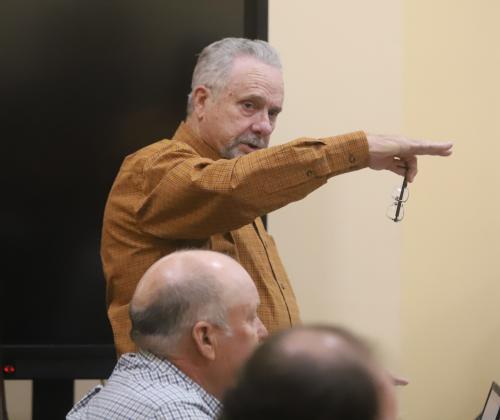

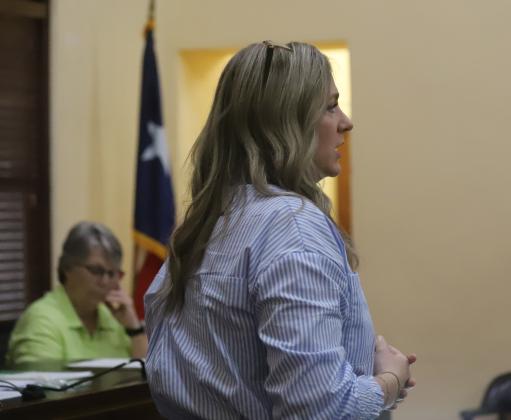
On Thursday, May 21, the Archer County Commissioner’s Court held a workshop on the tax implications of proposed industrial projects with a group of more than 50 residents on hand.
Vesper Energy has proposed a 2,300-acre Battery Energy Storage System (BESS) south of Archer City on DeMoss Road and is not seeking a tax abatement.
Google has proposed a data center on a 2,800-acre property along Three Way Road. County officials said discussions regarding a possible tax abatement are still in the early stages.
Commissioner Precinct 1 Wade Scarbrough said he requested the workshop because the court does not fully understand how the data center’s value could affect the county tax rate.
“Property values and tax rates are very difficult to explain,” County Tax Assessor-Collector Dawn Vieth said. “If I can have you understand one thing, it is that as values increase, your tax rate goes down. Values decrease, then your tax rates go up.”
Vieth said she could not provide specific projections because the projects’ final appraised values and future economic conditions remain unknown.
“Since the BESS has not requested an abatement, their values will be directly added to the tax roll,” Vieth said. “How these projects ultimately affect tax rates will depend on how they are appraised and when they are appraised.”
She said projects appraised after January would not appear on the tax roll until the following year.
“The proposed data center provides a different situation if a tax abatement is granted,” Vieth said. “The timing of the abatement is a key factor.”
Vieth said if an abatement begins at the start of construction, the project’s value would not be included in taxable appraised values during the abatement period.
“Once the abatement expires, the appraised value will be added to the county net taxable value, which could potentially reduce the county tax rate, significantly or modestly, depending on the future county-wide values and the final appraised value of the facility,” Vieth said. “We don’t know after 10 years what the facility will be worth.”
Because of the many unknown factors, Vieth said accurately predicting the long-term tax impact is nearly impossible.
“What is clear is that this project will have an effect,” Vieth said. “The extent of the effect will depend on future market conditions, developmental patterns and appraisal values.”
Scarbrough said the state does not allow counties to regulate activities on private property.
“The only way that we, the county, can put any kind of regulations is through tax abatement,” he said.
Scarbrough shared a list of possible requirements the county could seek during negotiations, including a volunteer fire department station, fire hydrants, additional deputies during construction, noise limits, setbacks, traffic plans and ambulance funding.
“These regulations and these controls, if they violate them then they lose their abatement and it costs them bunches of money,” Scarbrough said. “That’s the only way you can get through to these folks, costing them money.”
He added that current state law only requires developers to keep noise levels below 85 decibels at the property line.
County Attorney Jordyn Berend reiterated that the county currently has no tax abatement agreements in place. She added that several developers have approached the county expressing interest in building projects in Archer County.
“We have one proposal from one project manager that has not even entered the negotiations phase at this point,” Berend said. “Those of you who have come to commissioner’s court and seen in certain situations that we have to go into executive session. That is for those negotiations. State law requires that negotiations regarding a tax abatement have to be held in confidence.”
Berend noted that if a tax abatement agreement is reached, the county is required to hold public hearings to notify residents and receive public comment before the agreement can be voted on by the Commissioner’s Court.
“(Wichita Falls) have actually invited these industrial projects into Wichita Falls in certain situations and offered tax abatements,” Berend said. “That’s not the case here. The discussions for the tax abatements are not an invitation into Archer County. Rather these developers are saying we are going to come to your county and the tax abatement negotiation is the only way we can have any control over what they do on that property that is near your home.”
The county attorney added that the county has “a great commissioner’s court” that has told developers they do not want the projects in Archer County but will work to protect residents.
County Judge Randy Jackson reminded residents that informational documents from Google and Vesper are available on the county website.
The workshop concluded with a 45-minute public question-and-answer session. A recap of that session will be posted later.
- Log in or Subscribe to post comments.