County Holds Public Forum Over Data Center, BESS Projects
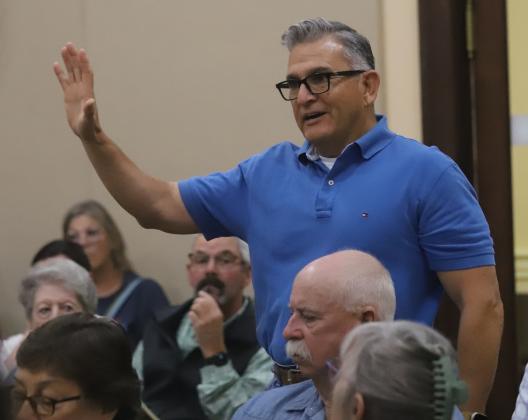
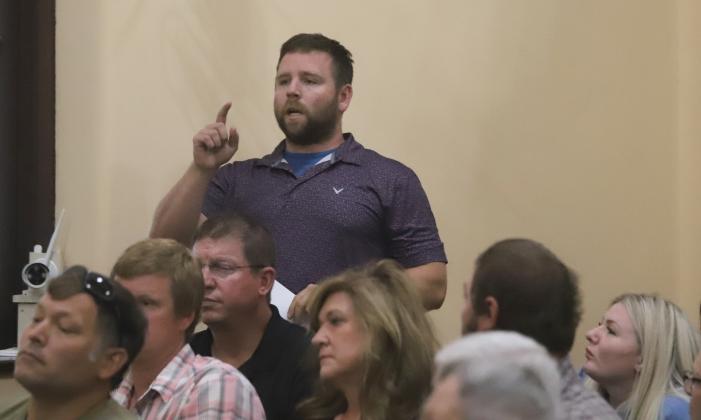
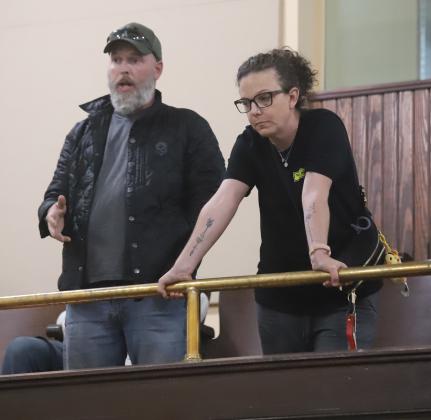
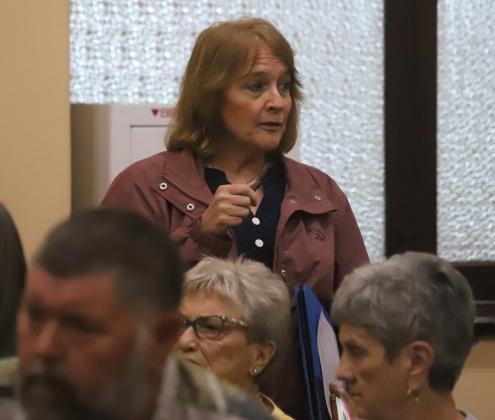
Following a workshop on the tax implications of proposed data center and Battery Energy Storage System projects in Archer County, the Archer County Commissioners Court held a public question-and-answer session Thursday, May 21, drawing nearly 50 residents concerned about the future of their communities.
The meeting lasted more than 45 minutes and centered on concerns about traffic, noise, light pollution, property values, water usage and the county’s legal authority to stop or regulate the projects.
Many residents voiced frustration over what they viewed as a lack of local control over industrial developments in unincorporated areas of the county.
Resident Joshua Stidham said he has yet to meet anyone in the region who supports the proposed data center project.
“To me, it sounds like we are being asked to make rules for them, to roll over, and just accept what’s going to happen,” Stidham said. “We moved into the country and out of the city. I want to raise my kids in a conservative, amazing city like Holliday, and now you have got all this coming in.”
County Judge Randy Jackson responded by emphasizing the limitations counties face under Texas law.
“Keep in mind we did not ask them to come,” Jackson said. “That is their land that they have purchased. The commissioner’s court is limited by what we can and cannot do.”
Stidham later criticized what he viewed as a willingness to accommodate the projects rather than fight them.
“I don’t see the fight that my town will bring to this,” Stidham said. “I don’t see the fight that I hear from people in the city every time I talk to them. I see the ‘ok, we can add a traffic light.’ I see ‘we can ease your taxes.’ We can do this. We can do that to make it easier. I don’t want it easier. I love Holliday and we chose it for a reason.”
A major topic throughout the meeting was whether the county could enact a moratorium similar to one recently approved in Hill County. Multiple residents urged commissioners to pursue any available legal avenue to slow or stop the developments.
“They (moratoriums) are not legal,” Jackson said. “We can’t enforce them.”
County Attorney Jordyn Berend said Texas counties do not have zoning authority outside municipalities and referenced a 2023 attorney general opinion stating counties lack authority to issue moratoriums halting industrial development.
“That private property that they bought is just like the private property that you bought,” Berend said. “The county can’t tell you what you can and can’t do on your property. Just like the county can’t tell them what they can and can’t do on their property.”
Berend said residents frustrated by the county’s limited authority would likely need to pursue changes at the state level.
Some residents questioned whether a moratorium could still discourage developers even if it could not ultimately be enforced. Berend acknowledged that possibility but warned it could create expectations the county cannot legally fulfill.
“If the county issues a moratorium saying we are not going to allow it, then our constituents are going to expect us to enforce that moratorium, and we don’t have that authority,” Berend said. “If we tried, we’d get sued by Google.”
Some residents encouraged county officials to take a stronger public stance against the developments regardless of legal uncertainty.
Mark Steel, whose property neighbors the proposed site, said the community would support commissioners if they pursued aggressive action.
“Is it illegal? Who knows,” Steel said in reference to a potential moratorium. “But here is the thing about it. If the commissioners get slapped on the wrist a little bit, the community has your back.”
Berend cautioned residents that even delaying or stalling tax abatement negotiations would not necessarily stop construction if developers ultimately chose to move forward.
“There’s nothing to say that at some point the developers decide to throw up their hands and say, ‘We’re done negotiating, and we’re going to do what we want,’” Berend said. “We can’t force them out through a moratorium or through stalling negotiations. It’s a gamble.”
Commissioners and residents also discussed the impact construction traffic could have on county roads.
Resident Charles Holovak questioned whether roads in northern Archer County could handle the increased traffic expected during construction of a data center.
Commissioner Pct. 1 Wade Scarbrough said developers have discussed major road improvements as part of the project.
“The plan that we reviewed, we have not agreed to anything yet, is for a total rebuild of Three Way Road to bring it up to Farm-to-Market Road standards,” Scarbrough said.
Scarbrough said plans discussed with developers include rebuilding portions of FM 2224 and Highway 79 to accommodate increased truck traffic, as well as adding turn lanes and traffic signals near the project area.
“We are trying to keep all traffic off the north end of Three Way Road,” Scarbrough said.
Residents also raised concerns about quality-of-life impacts, particularly noise and light pollution from a large industrial facility in a rural area.
One resident said she moved to the country for peace and quiet and worried about how the projects could affect livestock and horses.
Resident Tim Wire said he fears the projects could permanently alter the rural environment his family enjoys.
“We have a plethora of wildlife. It’s like living in a zoo, and my kids love it,” Wire said. “I just had a grandchild born two months ago, and I’m expecting those kids to be able to come 20 years from now and not say, ‘I don’t want to go to their house. It’s loud.’”
Wire and other residents also questioned why the county appeared focused on negotiating tax abatements rather than fighting the projects directly.
“I’ll reiterate once again that we don’t think tax abatements are a great deal, but it is the only tool that we have,” Jackson said.
Scarbrough said any conditions or controls the county hopes to negotiate with developers would likely have to come through tax abatement agreements. He added that officials remain open to hearing suggestions from residents.
Scarbrough also stressed that the county is still early in the process and has had only limited discussions with developers.
“We are trying to navigate through this,” Scarbrough said. “We don’t know what we are up against. We are trying to understand it.”
He added that the project changed significantly between the county’s first and second meetings with developers.
Questions were also raised about water and electrical infrastructure.
Resident Denise Galloway asked where water for the projects would come from. Jackson responded that Archer County does not control local water utility districts and has no authority over water systems in the county.
Scott Dyer raised concerns about the electrical demands of a data center, saying properties near the proposed site already experience power issues.
“They will probably build this data center if they get an energy allotment (from ERCOT,)” Jackson said. “Right now, they don’t have one. It’s all speculation right now.”
Archer City Councilwoman and County Republican Chair Leslie Hash encouraged residents to focus their efforts at the state level and emphasized the importance of voter participation in elections affecting state policy.
“If you are not one of the 31% of Archer County that voted then you have no dog in the fight,” Hash said. “We have a runoff election going on now that has implications on what the state does. I will ask each commissioner if you will commit to fight for Archer County and helping us keep these things away from our county and our cities.”
“Leslie, we have been fighting for your county,” Commissioner Pct. 4 Todd Herring responded. “This isn’t y’all’s county. This isn’t our county. It’s all of our county. We all live here, and I am against it just like Jordyn said.”
County officials repeatedly encouraged residents to remain involved in the process, attend commissioners court meetings and contact the commissioner’s court with questions and concerns. They also encouraged residents to contact state lawmakers if they want broader authority granted to counties over industrial development projects.
- Log in or Subscribe to post comments.